
Happy Fishing opens with a vibrant underwater arcade feel, but beneath the colorful visuals lies a structured system of rules, probabilities, and reward tiers that define the experience. Available on BD222, this title blends reflex-based shooting with calculated targeting, making it more than a casual pastime. Players engage with layered mechanics involving weapon multipliers, fish value scaling, and timed bonus waves, all of which influence outcomes. Understanding how these systems interact is essential for anyone aiming to optimize returns rather than simply enjoy the spectacle.
Core Gameplay Identity of Happy Fishing
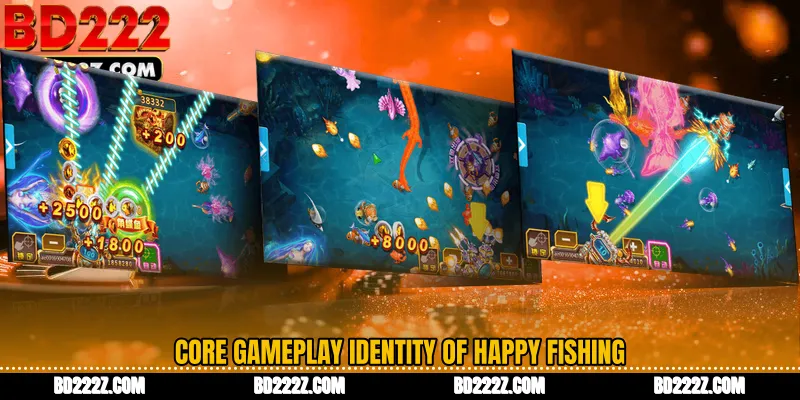
At its foundation, Happy Fishing operates as a skill-influenced shooting game where each fish represents a dynamic payout unit. The game board is a continuous aquatic field where different species swim across in patterns influenced by probability cycles. Each fish carries a predefined value multiplier, often ranging from x2 to x500 depending on rarity and size.
Unlike static slot mechanics, Happy Fishing requires players to actively aim and fire. The cannon system allows adjustable bet levels, meaning each shot carries a cost proportional to its potential reward. For example, firing at a higher level increases the likelihood of capturing larger fish but also consumes balance faster. This risk-reward loop is central to the gameplay experience.
Fish movement is not random chaos; it follows algorithmic routes that repeat over time. Observant players can identify entry patterns, especially during high-value waves where rare fish appear in clusters. Timing becomes critical, as shooting too early or too late can reduce efficiency. Another defining feature is the shared play environment. Multiple players can target the same fish simultaneously, and the reward goes to the one who lands the final hit. This introduces a competitive layer, pushing players to manage both accuracy and timing.
The visual feedback system reinforces engagement. Explosions, coin bursts, and multiplier flashes provide instant confirmation of success, while missed shots subtly encourage adjustment rather than frustration. Overall, Happy Fishing balances accessibility with depth, making it appealing to both new and experienced players.
Rules and Systems Behind Winning
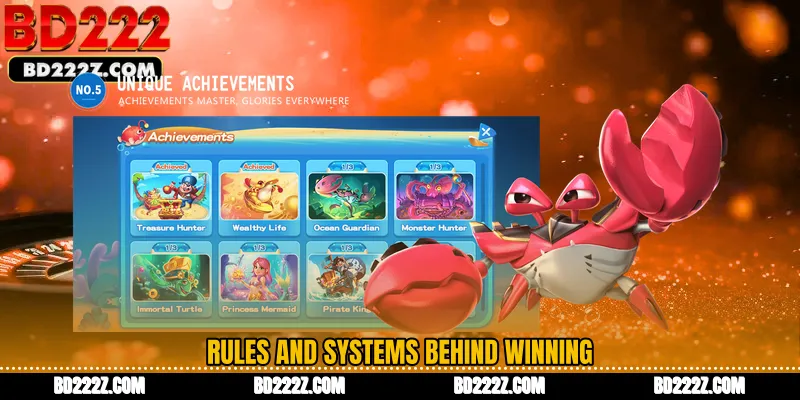
Understanding the rules is essential to mastering Happy Fishing, as success depends on more than random shooting. The game integrates structured mechanics that govern how fish are captured, how rewards are distributed, and how players can influence outcomes.
Cannon Mechanics and Hit Probability
Before diving into rewards, it is important to grasp how the cannon system affects gameplay:
- Each cannon level corresponds to a bet multiplier, typically ranging from 1x to 100x
- Higher cannon levels increase damage output but also increase cost per shot
- Hit probability is influenced by both cannon strength and fish durability
- Continuous firing drains balance quickly, requiring controlled pacing
Players often adopt hybrid strategies, switching between low and high cannon levels depending on the fish density and value present on the screen. This adaptability is a key skill in Happy Fishing.
Fish Categories and Value Scaling
Fish are categorized into tiers, each with distinct characteristics:
- Small fish: low durability, low rewards, high spawn frequency
- Medium fish: balanced difficulty and payout
- Large fish: high durability, high reward multipliers
- Boss fish: rare appearances with significant payout potential
Below is a structured overview of fish value scaling and estimated reward ranges:
| Fish Type | Multiplier Range | Capture Difficulty | Spawn Frequency |
| Small Fish | x2 – x10 | Low | Very High |
| Medium Fish | x10 – x50 | Moderate | High |
| Large Fish | x50 – x200 | High | Medium |
| Boss Fish | x200 – x500 | Very High | Low |
This table highlights how targeting strategy must align with risk tolerance. While small fish provide steady returns, large and boss fish offer exponential rewards but require patience and resource management.
Bonus Features and Special Weapons
Between regular gameplay cycles, Happy Fishing introduces special events that significantly alter reward potential:
- Laser Cannon Mode: temporarily increases damage output and area coverage
- Bomb Nets: capture multiple fish within a radius
- Freeze Skill: slows fish movement, improving targeting accuracy
- Golden Fish Wave: spawns high-value targets in quick succession
These features are not random; they are triggered based on internal game cycles. Experienced players learn to conserve resources and maximize output during these windows. BD222 integrates these mechanics seamlessly, ensuring that each session feels dynamic rather than repetitive. The platform’s stability also ensures that timing-based actions remain responsive, which is critical for competitive play.
Reward Structure and Real Value Analysis
After understanding rules and mechanics, the next layer of depth in Happy Fishing lies in its reward system. This is where gameplay translates into measurable value, especially when considering currency and payout structures.
Payout Logic and Currency Conversion
Rewards in Happy Fishing are calculated based on three variables: cannon level, fish multiplier, and final hit confirmation. The formula can be simplified as:
Reward = Bet per Shot × Fish Multiplier
To illustrate this in a practical context, consider the following table using BDT:
| Cannon Level (BDT) | Fish Multiplier | Estimated Reward (BDT) |
| 5 BDT | x20 | 100 BDT |
| 10 BDT | x50 | 500 BDT |
| 20 BDT | x100 | 2,000 BDT |
| 50 BDT | x200 | 10,000 BDT |
This structure demonstrates how scaling bets can significantly amplify returns, but also highlights the importance of accuracy. Missing high-value shots results in substantial losses.
Risk Management and Return Optimization
To maintain sustainability while playing Happy Fishing, players often follow structured approaches:
- Allocate a fixed session budget before starting
- Use low cannon levels during idle phases
- Increase bet size only during bonus waves
- Avoid chasing losses by over-betting
These strategies are particularly relevant on BD222, where consistent gameplay can lead to cumulative gains rather than sporadic wins.
Competitive Dynamics and Shared Rewards
Another critical aspect is the shared environment. Multiple players competing for the same fish introduces variability in reward distribution. Even if a player contributes significant damage, only the final hit secures the payout. This mechanic encourages precision over volume. Instead of firing continuously, skilled players wait for optimal moments to deliver decisive shots. This reduces unnecessary spending and increases efficiency.
In Happy Fishing, patience often outperforms aggression. Observing other players’ behavior can also provide insights into upcoming high-value opportunities, as experienced participants tend to focus on profitable targets. BD222 enhances this experience by maintaining smooth multiplayer synchronization, ensuring that outcomes remain fair and transparent. This reliability is crucial for maintaining player trust, especially in competitive scenarios.
Conclusion
Happy Fishing stands out as a hybrid of arcade action and structured reward systems, offering depth that rewards both skill and strategy. From cannon mechanics to payout calculations, every element contributes to a layered experience that goes beyond simple entertainment. Players who take the time to understand its rules and optimize their approach can significantly improve their outcomes. If you are ready to test your precision and strategy, joining BD222 is a practical step toward experiencing this dynamic game firsthand.